



June 24, 2026

Buying Your First Home on Vancouver Island: A 2026 Guide

This is the text area for this paragraph. Once you've added your content, you can customize its design by using different colors, fonts, font sizes and bullets. 

Author

Jody Blue

Share

Couple smiling and embracing in front of a cozy house with a porch and garden.

Buying your first home is one of the most exciting milestones in life, but let's be honest—it can also feel incredibly overwhelming. Between understanding interest rates, figuring out down payments, and navigating the fast-paced Vancouver Island real estate market, it is easy to feel lost. As a mortgage broker who has been helping clients in Parksville, Qualicum Beach, Nanaimo, and across the Island for over 25 years, my goal is to take the stress out of the process. I believe that an educated buyer is a confident buyer.


If you are looking to purchase your first home in 2026, here is everything you need to know to get started on the right foot.


The Importance of a Mortgage Pre-Approval

Before you start scrolling through real estate listings or visiting open houses, your very first step should be getting a mortgage pre-approval. A pre-approval is not just a rough estimate; it is a comprehensive review of your financial situation—your income, credit history, and down payment—to determine exactly how much a lender is willing to let you borrow.


Why It Matters

First, a pre-approval locks in an interest rate for a set period (usually 90 to 120 days). If rates go up while you are house hunting, you are protected. If rates go down, you get the lower rate. Second, it gives you a clear, realistic budget. There is nothing more heartbreaking than falling in love with a house only to discover it is outside your price range. Finally, in a competitive market, sellers and realtors take pre-approved buyers much more seriously. It shows you are ready and capable of closing the deal.


Understanding Your Down Payment

One of the biggest hurdles for first-time buyers is saving for the down payment. In Canada, the minimum down payment depends on the purchase price of the home:

  • For homes under $500,000, the minimum down payment is 5%.
  • For homes between $500,000 and $999,999, you need 5% of the first $500,000, plus 10% of the remaining amount.
  • For homes $1 million or more, a minimum 20% down payment is required.


Keep in mind that if your down payment is less than 20%, you will be required to purchase mortgage default insurance (often referred to as CMHC insurance). This premium is usually added to your total mortgage amount.


First-Time Home Buyer Programs in BC

The good news is that there are programs designed specifically to help you get into your first home more easily. Here in British Columbia, we have some excellent resources available.


The BC First Time Home Buyers' Program

This provincial program can save you a significant amount of money by reducing or completely eliminating the Property Transfer Tax (PTT) on your first home purchase. The PTT is typically 1% on the first $200,000 and 2% on the remainder up to $2 million. To qualify for a full exemption, the home must be your primary residence and the purchase price must be under a specific threshold (which the provincial government updates periodically). Partial exemptions are also available for homes slightly above the threshold.


The Home Buyers' Plan (HBP)

At the federal level, the Home Buyers' Plan allows you to withdraw funds from your Registered Retirement Savings Plan (RRSP) tax-free to use toward your down payment. You then have 15 years to repay the funds back into your RRSP. This can be a fantastic way to boost your down payment if you have been saving in an RRSP.


Budgeting for Closing Costs

A common mistake I see first-time buyers make is forgetting to budget for closing costs. Your down payment is not the only cash you need on closing day. You should set aside an additional 1.5% to 4% of the purchase price to cover expenses such as:

  • Legal fees (notary or lawyer)
  • Property appraisal fees
  • Home inspection fees
  • Title insurance
  • Adjustments for prepaid property taxes or utility bills


How an Independent Mortgage Broker Helps

When you go directly to your bank, they can only offer you their specific mortgage products and their posted rates. As an independent mortgage broker, I work for you, not the bank. I have access to dozens of lenders, including major banks, credit unions, and alternative lenders. This means I can shop the market to find the best rate and the best mortgage terms for your unique situation.


More importantly, I am here to guide you through the entire journey. From explaining the fine print to answering your late-night questions, I want you to feel completely supported. My job is to ensure you understand every option so you can make the best decision for your future.


Let's Get Started on Your Homeownership Journey

Buying your first home is a big step, but you don't have to take it alone. Whether you are ready to get pre-approved today or you just want to sit down and figure out a plan for the next year, I am here to help.

Ready to explore your options? Book a free consultation with Jody Blue today, and let's turn your dream of owning a home on Vancouver Island into a reality.


Three people meeting at a table with papers in a bright office overlooking the water.
By Jody Blue • October 19, 2026
Going through a divorce in BC? Jody Blue, mortgage broker in Parksville, explains your options — buying out a spouse, selling, or restructuring your mortgage.

Home office desk with laptop, papers, calculator, and coffee mug, overlooking a scenic lake view
By Jody Blue • October 12, 2026
Thinking about refinancing? A Vancouver Island mortgage broker explains six situations where refinancing your mortgage makes sense, and when it doesn't.

By Jody Blue • October 5, 2026
One of the most persistent myths in Canadian mortgage lending is that being self-employed makes getting a mortgage difficult — or even impossible. It is not true. But it does make things different. I have been helping self-employed borrowers across Vancouver Island qualify for mortgages for over 25 years. Contractors, business owners, consultants, tradespeople, freelancers — all with different income structures and almost all of them more qualified than they thought when they first came to talk to me. Why Self-Employed Mortgages Work Differently When a salaried employee applies for a mortgage, verifying income is straightforward. Two pay stubs, a letter of employment, two years of T4s — done. When you are self-employed, your income may be variable, may flow through a corporation, and you may legitimately write off significant expenses that reduce your taxable income on paper. Lenders know this. The challenge is proving your income in a way they can work with. Path One: Traditional Qualification Using Declared Income If you have been self-employed for at least two years and can document your income through Notices of Assessment, T1 General tax returns, and business financials, you may qualify through a traditional mortgage application using your average declared income over the past two years. This gives you access to the full range of lenders, often at the best available rates. What lenders want to see: two years of Notices of Assessment, two years of T1 General returns with all schedules, business financials prepared by an accountant, evidence the business is ongoing, and a credit score of 680 or above. Path Two: Alternative and Stated Income Lending If your declared income does not support the mortgage you need — or if you have been self-employed for less than two years — there are Alternative-A (Alt-A) lenders specifically structured to work with self-employed borrowers more flexibly. They take a broader view of your income, looking at business account deposits and overall financial picture rather than relying solely on your Notice of Assessment. Alt-A lending typically involves a slightly higher rate — the trade-off for the flexibility. But for borrowers who would otherwise be declined, it opens access to real mortgage financing. The rate difference is often smaller than people expect. What You Can Do to Strengthen Your Application Keep business and personal finances separate. Maintain a separate business account, pay yourself consistently, and keep records organized. Build your credit profile. Self-employed borrowers sometimes have thinner credit profiles. Make sure you have established credit history in your personal name. Have two years of self-employment history. Two years is the standard threshold at which traditional lenders become comfortable. If you are close, it may be worth waiting — or exploring alternative lending in the interim. Do not maximize your deductions the year before you apply. Aggressively reducing your declared income in the year before your mortgage application can work against you, even if it saves on taxes. Talk to your accountant early. Why a Mortgage Broker Matters More for Self-Employed Borrowers Not all lenders are equally equipped to handle self-employment income. A broker who works regularly with self-employed borrowers knows exactly which lenders are the right fit and can position your application in the best possible way. I have been doing this for over 25 years. I know which lenders want to see two years of NOAs, which ones will work with business deposits, and which ones have appetite for your specific situation. That knowledge is often the difference between a declined application and an approved one on the exact same financial profile. If you are self-employed and wondering whether you can qualify — or if you have already been told no somewhere — let’s talk. Learn More About Purchase Mortgages → Book a Free Conversation →

Couple smiling on a house porch, holding hands and looking at each other with a scenic coastal view behind them
By Jody Blue • September 28, 2026
Buying your first home on Vancouver Island? A Parksville mortgage broker breaks down programs, pre-approvals, and what first-time buyers actually need.

Woman reading a letter on a sofa with a laptop and papers beside her, overlooking a bright waterfront view
By Jody Blue • September 21, 2026
Most Canadians sign their renewal without shopping around — and it costs them. A Parksville mortgage broker explains what to do instead.

Two people reviewing papers at a laptop by a sunlit window with a lake view
By Jody Blue • September 14, 2026
A Certified Reverse Mortgage Specialist in Parksville BC breaks down who a reverse mortgage works for, who it doesn't, and what to consider before deciding.

Family smiling outside a dark wood cabin, with one adult holding up a key in front of the porch
By Jody Blue • September 7, 2026
Learn how mortgage portability works in Canada, how to port and increase your mortgage when upsizing, and how to avoid massive prepayment penalties.
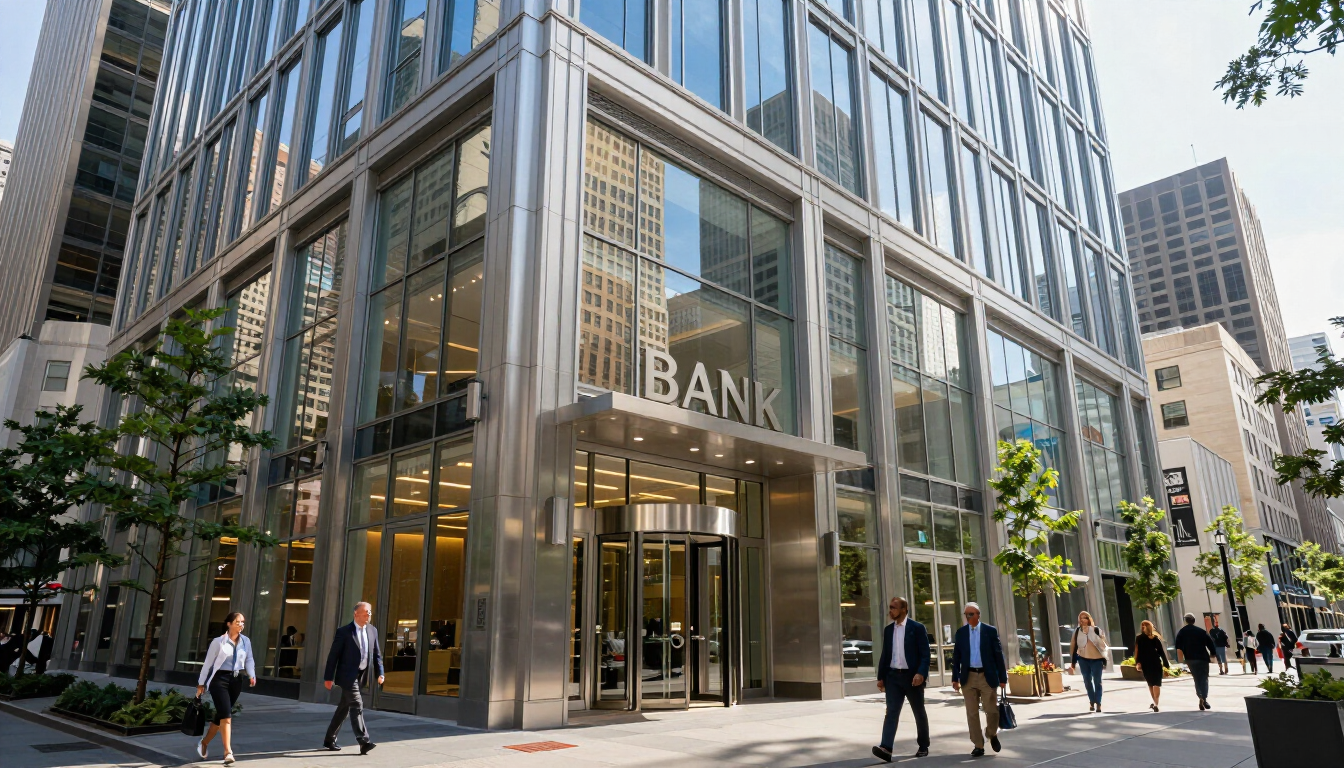
By Jody Blue • September 2, 2026
The Bank of Canada announced today that it is holding its target for the overnight rate at 2.25%, with the Bank Rate at 2.5% and the deposit rate at 2.20%. While Canada's economic recovery is broadening, a new layer of uncertainty has entered the picture. Here is what happened and what it means for your mortgage.

Woman standing in a sunlit kitchen beside a marble island, smiling near a window with trees outside
By Jody Blue • August 31, 2026
Should you choose a HELOC or refinance your mortgage to access your home equity? Learn the pros, cons, and costs of each option for BC homeowners.
Two people on a couch reviewing a laptop by a fireplace in a bright living room
By Jody Blue • August 24, 2026
Should you choose a fixed or variable mortgage rate? Learn the pros, cons, and penalty differences to make the best choice for your Vancouver Island home.